Welcome to Jord Heavy Industry Machinery Official WebSite!
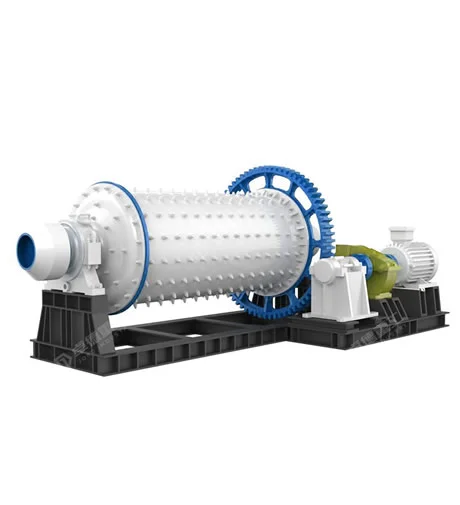
Ballmill is key equipment for the secondary grinding after the primary crushing.The material be fed into the first warehouse of the mill evenly from the hollow shaft by the feeding device.
Ballmill is key equipment for the secondary grinding after the primary crushing.The material be fed into the first warehouse of the mill evenly from the hollow shaft by the feeding device.The warehouse is equipped with a ladder liner or corrugated liner,different specifications of the ball,and the cylinder rotating centrifugal force to bring the steel ball to a certain height after the fall and it has a heavy blow and grinding effect to the material.With rough grinding after in the first warehouse,the material with the secondary grinding in the second warehouse and which has a built-in liner and then it discharged by the discharge grated plate.
Ball mill is widely used in cement,silicate products,new building materials,refractory materials, fertilizers, black and nonferrous metals glass, ceramics and other industries.According to the processing technology,it be divided into dry and wet two grinding process methods.Wet ball mill is divided into lattice type and overflow type.
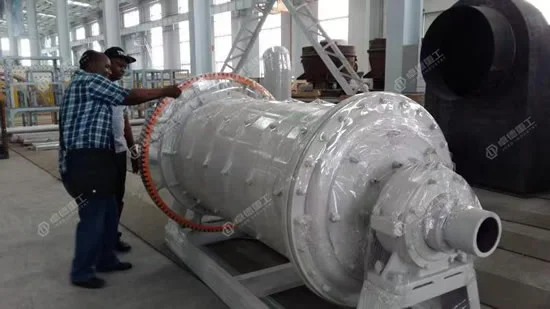
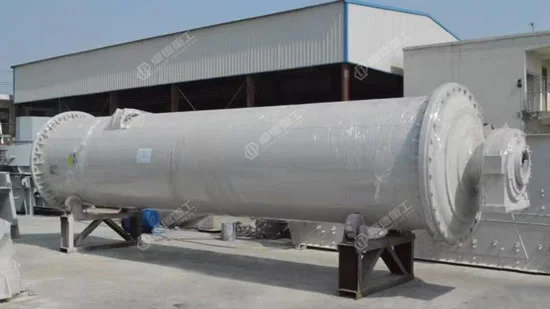
Capacity:0.37-65t/h (The exactly capacity base on the user's local site and production environment)
Application fields:cement, silicate products, new building materials,refractory materials,chemical fertilizer,mineral processing of black and non-ferrous metals,glass ceramics and other production industries
Applicable materials: cement raw material,clinker,desulphurization limestone powder in power plant,slag powder,manganese ore,gypsum,coal,barite,calcite,bauxite,etc
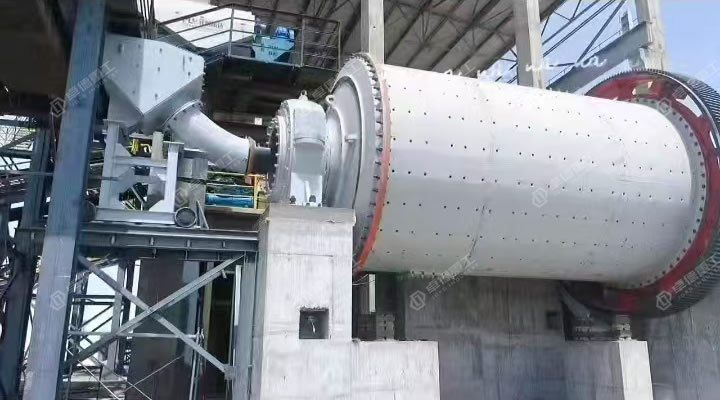
PERFORMANCE ADVANTAGES
Adopt reducer with high quality and national standard.
Flexible and reasonable designs of discharge part,customers can choose iron remover according to their own needs.
Adopt the unique small gear to drive the big gear,which makes the operation more stable.
High efficiency,good quality for line, liner and grinding ball using high manganese materials,longer service life, with non iron powder pollution design for hard materials.
The cylinder,lining plate,medium,partition plate and discharge grate plate of the rotary part are all made of high quality components.
The feeding volume of the feeding part is large,and the reasonable design of the feeding port increases the feeding volume.
The closed system is adopted to reduce the dust.The closed system is formed by the ultra-fine ball mill and the classifier.The negative pressure transportation can reduce the dust and reduce the pollution to the environment.
TECHNICAL PARAMETER
| Model | Rotary Speed (r/min) | Ball Weight (t) | Feeding Size (mm) | Output Size (mm) | Capacity (t/h) | Power (kw) | Weight (t) |
|---|---|---|---|---|---|---|---|
| Φ900×3000 | 35.6 | 2.4 | ≤25 | 0.075-0.89 | 0.8-2.5 | 22 | 5.3 |
| Φ1200×3000 | 32.4 | 4.5 | ≤25 | 0.074-0.4 | 1.6-3 | 37 | 12.1 |
| Φ1200×4500 | 32.4 | 7 | ≤25 | 0.074-0.4 | 1.83-3.9 | 55 | 13.1 |
| Φ1500×3000 | 29.7 | 7.5 | ≤25 | 0.074-0.4 | 2.8-4 | 75 | 14.8 |
| Φ1500×4500 | 29.7 | 11 | ≤25 | 0.074-0.4 | 4.8-7 | 110 | 19.9 |
| Φ1500×5700 | 29.7 | 14 | ≤25 | 0.074-0.4 | 5-8 | 130 | 23.4 |
| Φ1500×7000 | 29.7 | 17 | ≤25 | 0.074-0.4 | 6-8 | 155 | 27.5 |
| Φ1830×3000 | 25.4 | 11 | ≤25 | 0.074-0.4 | 4.5-10.5 | 130 | 26.6 |
| Φ1830×4500 | 25.4 | 17 | ≤25 | 0.074-0.4 | 6.8-11.5 | 155 | 30.4 |
| Φ1830×6400 | 25.4 | 24 | ≤25 | 0.074-0.4 | 7-12 | 210 | 32.3 |
| Φ1830×7000 | 25.4 | 26 | ≤25 | 0.074-0.4 | 7.8-13.8 | 245 | 34.2 |
| Φ2100×3000 | 24.9 | 15 | ≤25 | 0.074-0.4 | 5.8-14 | 210 | 32.3 |
| Φ2100×4500 | 24.9 | 23 | ≤25 | 0.074-0.4 | 9.5-18 | 245 | 40 |
| Φ2400×3000 | 20.8 | 20 | ≤25 | 0.074-0.4 | 7.8-18 | 245 | 51.3 |
| Φ2400×4500 | 20.8 | 30 | ≤25 | 0.074-0.4 | 13.7-28 | 380 | 63.7 |
| Φ2700×4000 | 19.5 | 34 | ≤25 | 0.074-0.4 | 15-28 | 475 | 89 |
| Φ2700×4500 | 19.5 | 39 | ≤25 | 0.074-0.4 | 16.5-36 | 475 | 97 |
REMARKS
The above ball mill only lists the length of typical ball mill, and can also make different length ball mill according to the actual situation of materials or customer requirements.